
About us
Our mission
In the era of ecological transition, architecture must rethink energy’s role. However, many practitioners still view photovoltaics as a technical constraint rather than a creative catalyst, limiting the potential of recent technological advancements and interdisciplinary synergy.
Solar energy, far from being a purely functional component, holds the capacity to become an expressive material and a generator of architectural form. The integration possibilities now available — remarkable in their material quality, flexibility, and aesthetic potential — remain largely untapped due to a lack of cultural and design awareness. It is therefore essential to foster a renewed vision in which energy is no longer seen as an isolated parameter, but as a core element of a contemporary architectural language rooted in interdisciplinary intelligence.
To engage architects meaningfully, communication must adopt a language that resonates with the architectural profession: a cultivated, layered discourse that highlights the virtuous interplay between form, technology, and sustainability. Only through a systemic design approach — one that extends from conceptual genesis to construction detail — can the true architectural value of solar integration be recognized and embraced.
The principal objective of this website is to catalyze a paradigm shift, redirecting the focus from mere technology to the architectural essence of solar design. Through built examples, project narratives, and exemplary case studies, www.solarchitecture.ch seeks to demonstrate the feasibility and richness of solar buildings that unite aesthetic excellence, technical innovation, and environmental responsibility. By placing architecture at the forefront, the platform encourages both architects and clients to adopt new construction paradigms — ones grounded in an integrated and conscious approach to sustainability.
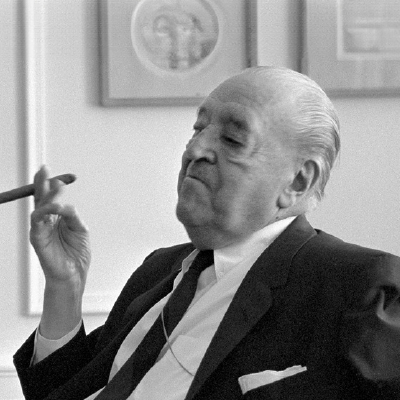
“Wherever technology reaches its real fulfillment, it transcends into architecture. Architecture wrote the history of the epochs and gave them their names. Architecture depends on its time. That is the reason why technology and architecture are so closely related.”
Architect
Ludwig Mies van der Rohe
About us
SUPSI (University of Applied Sciences and Arts of Southern Switzerland) is one of the nine professional universities recognized by the Swiss Confederation. Founded under Federal Law, SUPSI offers more than 30 Bachelor’s Degree and Master’s Degree courses, characterized by cutting edge education which unites classical theoretical-scientific instruction with professional orientation. Great care is given to research, carried out in key sectors on competitively acquired projects with large European and national agencies or mandated by organizations and institutions.
ISAAC (Institute for Applied Sustainability to the Built Environment) covers research areas associated with renewable energy, the rational use of energy, the refurbishment and maintenance of buildings and also energy planning at regional and local levels. Research projects are based on a variety of regularly-revised methods, and benefit from productive collaboration agreements with other research units, public bodies, non-governmental organizations and industries.
The Institute promotes technological transfer in a number of developing countries.The Innovative Envelope research team of ISAAC has acquired expertise over last 15 years as a result of various research projects on integrated photovoltaics (BIPV-Building Integrated Photovoltaics) conducted both at national and international level. It hosts the Swiss Competence Centre for BIPV. Research was carried out in collaboration with manufacturers whilst, working closely with architects and installers. Tests were carried out to qualify and validate the new concepts, both in the laboratory and on site under real conditions. The research focuses mainly on the development, analysis, experimentation and demonstration of innovative and sustainable solutions for multi-functional building envelope systems suited to future zero-emission buildings.